: Home to Former Movie Stars! Once upon a time, film producers specializing in documentaries about life in tropical forests chose Belize as their favorite destination. Critters now living in the Belize Zoo were once “stars” of these documentaries, but after film crews completed their projects, some of the animals had become so habituated to humans, they could no longer live in the wild. In 1983, film crew members plus Belize animal lovers carved out a zoo home for these animals and since then, animals who have been orphaned, rescued or rehabilitated enough to join the family have come to live here, too. It’s fun to see this unique zoo and a visit is guaranteed to delight kids of all ages. Belize’s version of what a zoo should look and feel like won’t match your previous experiences. While the animals you view are in enclosures, don’t be surprised to see animals who “visit” from the outside to do what all social beings do: hang out with like-minded creatures, steal some food and thrill visitors. What species are you most likely to see? Some will be familiar; raccoons, snakes and squirrels, but you may never before have seen exotic species who make their homes here, like tapirs, gibnuts, coatimundis, jaguars and other exotics, plus gorgeous birds in every rainbow color. First, if you’re a fan of the humane treatment of animals, you will be impressed by the way this little zoo is run. It’s not fancy and it’s not huge, but this zoo has a different vibe than any zoos you’ve seen in the past. The aforementioned visits from jungle animals who linger nearby to commune with the zoo’s inhabitants makes this one unique facility. From quiet, spellbinding species to loud-mouthed black howler monkeys who aren’t shy about chatting up their relatives on the periphery of the zoo, the variety of animals you’ll see is impressive. For the best of all experiences, take the Belize Zoo’s night tour to see nocturnal residents awake and alert. The zoo compound is situated on 29-acres of savanna, but all of the action happens at the zoo’s epicenter, located just 29 miles from Belize City. Any time you like! The zoo is open daily from 8:30 a.m. to 5 p.m. Zoo residents don’t take vacations nor do they mind bad weather. Take the George Price Highway from Belize City if you’re driving, but your best bet is booking a tour through a resort like Cahal Pech. They can handle all details, including transport and a guide to make your visit enjoyable and relaxing.

Follow me on Facebook Blog about Belize and Twitter. News events and more from around the country.
Sunday, 6 March 2016

Saturday, 5 March 2016
Belize is named after 20 countries in money laundering
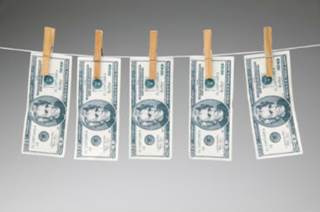
A major money laundering is defined by statute as one “whose financial institutions engage in currency transactions involving significant amounts of proceeds from international narcotics trafficking.”
The following countries/jurisdictions have been identified this year in this category:
Antigua and Barbuda: Antigua and Barbuda made the list again because the U.S. government says its offshore center continues to be vulnerable to money laundering and other financial crimes. The State Department report points to Antigua and Barbuda’s relatively large financial sector and Internet Gaming industry as adding to its overall susceptibility to money laundering.
Argentina: The South American nation of Argentina has been slammed for “institutionalized corruption, drug trafficking, high levels of informal and contraband trade, and an active informal exchange market,” putting it again on the US major money laundering list. According to the State Department report, contraband, which is smuggled into Argentina through the tri-border area (Argentina, Paraguay, and Brazil), and a very porous northern border shared with Bolivia and Paraguay, and through changes to shipping manifests designed to disguise the importer and the type of merchandise adds to the general vulnerabilities in the financial system and exposes Argentina to risk of terrorism financing as well.
The Bahamas: The Commonwealth of the Bahamas also made the US’ major money laundering nations list. The US says because The Bahamas remains a transit point for illegal drugs bound for the United States and other international markets, it remains a major sources of laundered proceeds from drug trafficking, firearms trafficking, gambling, and human smuggling. There is also reportedly a black market for smuggled cigarettes and guns while money laundering trends, according to the US State Department, includes the purchase of real estate, large vehicles, boats, and jewelry, as well as the processing of money through a complex web of legitimate businesses and international business companies (IBCs) registered in the offshore financial sector. “Drug traffickers and other criminal organizations take advantage of the large number of IBCs and offshore banks registered in the Bahamas to launder significant sums of money,” the report added.
Belize: Belize also made the list even though it is not a major regional financial center. However, it has a substantial offshore financial sector and being a transshipment point for marijuana and cocaine, and human trafficking, there are strong indications that laundered proceeds are increasingly related to organized criminal groups involved in the trafficking of illegal narcotics, psychotropic substances, and chemical precursors, according to the U.S. State Department. This leaves the country vulnerable to money laundering and terrorist financing, the report added.
Bolivia: Bolivia has been named as one of twenty nations in the Americas – Latin America and the Caribbean that is a “major money laundering” nation. While Bolivia like Belize is not a regional financial center, the U.S. State Department says the country remains vulnerable to money laundering since illicit financial activities are related primarily to cocaine trafficking and include corruption, tax evasion, smuggling, and trafficking in persons. Criminal proceeds laundered in Bolivia are derived from smuggling contraband and from the foreign and domestic drug trade while there is a significant market for smuggled goods in Bolivia, the US report said. In addition, in the informal sector, large amounts of money are split into smaller quantities to avoid detection and review by the financial regulatory agencies and this laundered money then enters the formal market through the financial system, the report added.
Brazil: Also making the list is South American giant Brazil, the second-largest economy in the Americas and among the ten largest economies in the world, by nominal GDP. The U.S. State Department says the fact that Brazil is a major drug-transit country makes it open to money laundering, which is primarily related to drug trafficking, corruption, organized crime, gambling, and trade in various types of contraband and counterfeit goods. “Money laundering channels include the use of banks, real estate investment, financial asset markets, luxury goods, remittance networks, informal financial networks, and trade-based money laundering,” the US report said.
The British Virgin Islands: The UK overseas territory – the British Virgin Islands (BVI) also found its way on the major money laundering list. The US State Department says since the BVI is a favored destination for registering shell companies that can be established for little money in a short amount of time in the BVI’s offshore business as well as its proximity to the U.S. Virgin Islands and the use of the U.S. dollar for its currency makes it vulnerable to money laundering.
The Cayman Islands: Another UK territory also finding its way on to the US’ major money laundering list is The Cayman Islands. The State Department says that “most money laundering that occurs in the Cayman Islands is primarily related to foreign criminal activity and involves fraud, tax evasion, and drug trafficking, largely cocaine.”
Colombia: Money laundering of money, primarily from Colombia’s illicit drug trade and illegal mining, continues to penetrate the Colombian economy and affect its financial institutions, the US report said. They point to money laundering as a present in geographic areas controlled by both the Revolutionary Armed Forces of Colombia (FARC) and the bandas criminales (BACRIM) as well as through criminal organizations with connections to financial institutions in other countries smuggle merchandise to launder money through the formal financial system using trade and the non-bank financial system.
Costa Rica: According to the U.S., much of the money laundering in Costa Rica is channeled through the country’s nascent construction industry. However, other sectors have been identified as vulnerable to exploitation by criminal organizations seeking to launder illicit funds and by transnational criminal organizations who increasingly favor Costa Rica as a base to commit money laundering because of its geographic location and other factors, including limited enforcement capability. In 2015, the head of Costa Rica’s intelligence agency, known as the DIS for its Spanish acronym, said that approximately $4.2 billion annually is laundered in Costa Rica.
Curacao: Curacao, an autonomous country within the Kingdom of the Netherlands that defers to the Kingdom in matters of defense, foreign affairs, final judicial review, human rights, and good governance, also made the list. The U.S. says since they country is a transshipment point for drugs from South America bound for the United States, the Caribbean, and Europe, money laundering is present and primarily related to proceeds from illegal narcotics. “Money laundering organizations take advantage of the availability of U.S. dollars, banking secrecy, offshore banking and incorporation systems, two free trade zones (airport and harbor), an expansive shipping container terminal with the largest oil transshipment center in the Caribbean, and resort/casino complexes to place, layer, and launder illegal proceeds,” the U.S. State Department report said, adding that the laundering occurs through real estate purchases and international tax shelters as well as through wire transfers and cash transport among Curacao, the Netherlands, and other Dutch Caribbean islands and illegal underground banking.
Dominican Republic: The Dominican Republic’s listing as a major transit point for the transshipment of illicit narcotics also makes it vulnerable to money laundering and terrorism financing threats, the U.S. State Department says. The major sources of laundered proceeds stem from illicit trafficking activities, tax evasion, and fraudulent financial activities, particularly transactions with forged credit cards, the report added, noting that U.S. law enforcement has identified networks smuggling weapons into the DR from the United States as well as car dealerships, the precious metals sector, casinos, tourism agencies, and real estate and construction companies as contributing to money laundering activities in the DR.
Guatemala: Guatemala’s money laundering occurs in the real estate sector, ranching, and concert business, the State Department says. In addition, lax oversight of private international flights originating in Guatemala provides an additional avenue to transport bulk cash shipments directly to South America as the country continues to be a transshipment route for South American cocaine and heroin destined for the United States, and for cash returning to South America.
Haiti: In Haiti, according to the U.S. State Department, much of the money laundering is linked to drug trafficking. Most of the identified money laundering schemes involve significant amounts of U.S. currency held in financial institutions outside of Haiti or non-financial entities in Haiti, such as restaurants and other small businesses, said the U.S.
Mexico: In Mexico, the US says much of its money laundering is linked to trafficking of cocaine, heroin and marijuana, and methamphetamine destined for the United States. Other significant sources of laundered funds include corruption, tax-evasion, influence peddling, kidnapping, extortion, intellectual property rights violations, human trafficking, and trafficking in firearms, says the State Department. Additionally, the proceeds of Mexican drug trafficking organizations are laundered using variations of trade-based methods, particularly after Mexico placed restrictions in 2010 on amounts of U.S. dollar deposits.
Panama: Panama’s money is laundered via bulk cash and trade by exploiting vulnerabilities at the airport, using commercial cover and free trade zones (FTZs), and exploiting the lack of regulatory monitoring in many sectors of the economy, according to the US report. Money laundered in Panama is believed to come in large part from the proceeds of drug trafficking due to the country’s location along major drug trafficking routes as well as tax evasion, financial fraud, and corruption.
Paraguay: Paraguay’s money laundering , according to the US, occurs in both the formal financial sector and the non-bank financial sector, particularly in exchange houses. Both sectors move illicit proceeds into the U.S. banking system, according to the State Department report, which notes that large sums of dollars generated from normal commercial activity and suspected illicit commercial activity are also transported physically from Paraguay to Uruguay and Brazil, with onward transfers likely to destinations that include banking centers in the United States making the country also a major drug transit country and money laundering center.
Sint Maarten: The Dutch-Caribbean territory of Sint Maarten also made the list. Here, according to the U.S. State Department, money laundering is primarily related to proceeds from illegal narcotics trafficking. “Bulk cash smuggling and trade-based money laundering may be problems due to the close proximity to other Caribbean islands and Saint Martin, the French part of the shared island, which is also a free trade zone,” the report said, adding that money laundering of criminal profits occurs through business investments, purchases of real estate, and international tax shelters. Its weak government sector continues to be vulnerable to integrity-related crimes.
Uruguay: Uruguay’s money laundering is linked to transnational organized crime originating in Brazil, according to the US. The State Department says, in Uruguay, laundered criminal proceeds are derived primarily from foreign activities related to drug trafficking organizations. “Drug dealers also participate in other illicit activities like car theft and human trafficking, and violent crime is increasing significantly,” the US report added.
Venezuela: Rounding out the list of major money laundering nations is Venezuela. The U.S. says money laundering is widespread in Venezuela, and can be seen in a number of areas, including government currency exchanges, commercial banks, gambling, real estate, agriculture, livestock, securities, metals, the petroleum industry, and minerals. Increased Venezuelan money laundering activity has also been reported in the FTZs of Panama and Ecuador, said the report.
Friday, 4 March 2016
McAfee: I'll Crush Trump and Clinton Software entrepreneur says major-party 'clown show' opens door for Libertarians.
Entrepreneur John McAfee says this year’s tumultuous and unpredictable presidential contest, which has buoyed unconventional candidates, offers a once-in-a-lifetime opportunity for the Libertarian Party presidential nominee to win, or at least come close.
And he believes he has the message and personality to make it happen.
McAfee, well-known for the antivirus software company that bore his name for two decades, made many appearances on cable TV this week to discuss phone encryption and says his flair for self-promotion will go a long way toward landing a spot on general election debate stages.
“If I can’t win in a year when we have dissatisfaction and children on stage, well then the Libertarians should just give up,” he says. “This is the only chance we have, this opportunity to enter a clown show dressed as and acting like the people who are actually suffering in this country. Trust me, I’ll have no problem whatsoever winning this election.”
The eccentric 70-year-old speaks with the candor of GOP front-runner Donald Trump and with the clarity of libertarian hero Ron Paul, a former congressman.
“When I travel, I’m constantly stopped by people asking for photos,” he says. “I’m not tooting my own horn, but I have the ability to reach the people. They will listen because I have a checkered background and I may say something interesting.”
Among McAfee’s proposals are a voluntary month in jail for politicians in favor of new criminal penalties and abolition of drug testing for federal employees. But his primary campaign issue is a patriotic appeal for self-defense from cyber attacks from countries like China or Russia.
He says enormous hacks of federal worker data and FBI contact information show the technological incompetence of the government to protect against potentially catastrophic cyber warfare, which he says could destroy the entire U.S. power grid and kill many Americans.
Time will tell if he's sufficiently mainstream to attract Republicans disillusioned with Trump and liberals who backed Sen. Bernie Sanders of Vermont – should he lose to Democratic front-runner Hillary Clinton.
[RELATED: Trump, Clinton Romp Through Super Tuesday]
McAfee insists he will make no personal attacks on other candidates and sometimes catches himself mid-sentence making an unkind observation. But he has no problem characterizing the major-party nominating contests as “kindergarten politics” and accusing name-callers of masking their ineptitude and superficial differences.
“This personalization of politics has become absurd, and you realize what a farce and a laughingstock America has made of itself. Do you think the Russians are respecting us now? No, they’re rolling on the floor laughing,” he says.
“We should be ashamed of ourselves to the core as Americans that this political charade has reached the level that it has reached. Ashamed! Truly Ashamed.”
Before facing off against major-party candidates, McAfee first must defeat former New Mexico Gov. Gary Johnson at the Libertarian convention in May. He feels good about his chances against Johnson – the party's 2012 nominee, now a pot company CEO – and is looking toward the general election.
In many ways, McAfee is an even more unconventional candidate than Trump, who appears set for the GOP nomination after winning 10 of the first 15 state nomination votes. He openly acknowledges being jailed several times – all but one, a driving under the influence charge involving Xanax, he characterizes as acts of civil disobedience.
By his count, McAfee has helped start 17 companies, 11 of which he says made money. Intel agreed to buy his anti-virus software company McAfee Associates for $7.7 billion in 2010, more than a decade after McAfee sold his stake of the company for more than $100 million. Tribal Voice, a messaging app company he founded, sold for $17 million in 1999.
But he won’t say if he’s currently a millionaire – a private matter, he says, for so long as election law allows. (The New York Times reported in 2009 his net worth had fallen to $4 million during the financial crisis.)
As McAfee’s profile again rises, some readers are sure to recall his dramatic flight from police in Guatemala, where he hunkered down in 2012 after leaving Belize when his neighbor was murdered.
He faced no criminal charges in the neighbor’s death and says the experience had a deep impact on his foreign policy views. The murder and his flight happened months after Belize gang-suppression police – trained and armed by the U.S., McAfee says -- raided his home and antibiotic factory and shot his dog when he refused a $2 million extortion attempt from a local politician, he says.
“You tell me I don’t know something about foreign affairs and what happens when we interfere with the internal affairs of corrupt nations,” he says. “The government murdered my neighbor and came to question me, but I was not about to be questioned where they string you up by your heels, put a football helmet on your head and beat the helmet until your brains turn to mush.”
He says he would like to ask Clinton, who was secretary of state at the time, “'for what purpose did you train these brutal, criminal people?' Because I want to know what sick, twisted webs you people have woven to allow this to happen.”
As with any candidate looking for an electoral footing, McAfee has some positions that set him apart. Whistleblower Edward Snowden, he says, is a hero and would get his pardon. And he believes the government should not try to regulate what people do with their own bodies, such as take drugs, though he says he hasn’t personally used an illegal substance in 30 years.
McAfee says he already is thinking about his running mate and promises to keep things interesting.
“You might expect someone unexpected,” he says. “My wife is black, my life is checkered and I am outside the box.”
Thursday, 3 March 2016
DEALERS ARRESTED ASSUMPTIONS BELIZEAN in Chetumal


Chetumal. Two suspected smugglers Belizeans were arrested by elements of the State Police during his travels routine in Ribera del Rio Hondo, when they were in possession of several bales of clothing from the Free Zone of Belize, which were delivered to the Subdelegación the Attorney General's Office (PGR) in Chetumal.The agents disclosed that during his travels surveillance in Ribera del Rio Hondo, found that two people who were traveling aboard a Toyota van, red, with plates of the neighboring state of Belize, behaved suspiciously.
In this situation they asked them to stop the march of the unit to perform a review; however, they tried to flee, but were arrested kilometers later by a raid by the police elements who immediately practiced them a review. Inside the van, police officers located three bales of clothing from the free zone, which could not prove their legal entry into the country, so they were secured and taken to the base of the Ministry of Public Security ( SSP). On the site, the two subjects were identified as Christopher Cano 36, Cesar Campos Gonzalez, 32, both originally from Belize, who were delivered for the office of the Attorney General's Office (PGR) in Chetumal. (SOURCE: ANSWER)
Caribbean countries endorse strategy to accelerate pro-growth reforms
BELMOPAN, Belize, Mar 1, CMC – Twelve Caribbean countries Tuesday endorsed a joint communique to move forward on a pro-growth agenda, as they re-affirmed their commitment to shape a new agenda for sustainable and inclusive growth in the Caribbean.
The countries – Anguilla, Belize, Dominica, the Dominican Republic, Grenada, Guyana, Jamaica, Montserrat, St. Kitts and Nevis, St. Lucia, Suriname and St. Vincent and the Grenadines – have also the welcomed the results accomplished in Phase I of the Caribbean Growth Forum (CGF) adding that they are committed to building on those results to enhance the competitiveness of their respective countries.
“We reaffirm our commitment to shape national and regional reforms and to help track the implementation of actions launched to spur sustainable growth, create jobs and ensure shared prosperity.
“We recognize that the Caribbean Growth Forum provides an important platform for regional reforms to be implemented, and where regional peer-to-peer learning and access to global good practices is essential to foster innovation,” the 12 countries said in a joint communique.
“This event is an important milestone for member countries of the Caribbean Growth Forum. Together with our partner institutions, the World Bank is fully committed to support the sustainable development agenda that many Caribbean nations are pursuing and to identify innovative solutions that will generate growth, competitiveness and job creation,” said the World Bank Country Director for the Caribbean, Sophie Sirtaine.
“This initiative provides a real platform for Caribbean nations to accelerate progress made on reform actions and foster greater focus on results, transparency and accountability,” she said.
The CGF, which ends on Wednesday, provides a platform for private sector and civil society to shape national reforms and help track the implementation of actions needed to spur sustainable growth and opportunities for the people of the Caribbean.
During the meeting, countries will discuss and agree on how to create result based roadmaps to accelerate reforms and help track the implementation of actions linked to these reforms in the areas of investment climate, skills and productivity, and logistics and connectivity.
The 12 regional countries say to address the common challenges faced by Caribbean countries, they will “commit to further engage in an inclusive and transparent dialogue with key public and private partners as well as the civil society.
“More regular engagement with all Caribbean stakeholders will help focus on results and deliver on agreed actions outlined in country roadmaps,” they said, adding “we firmly believe that coordination mechanisms within government need to be strengthened in each country to ensure consistent monitoring and engagement with stakeholders”
The Caribbean countries say they consider that accountability mechanisms present a unique way of defining reforms clearly, with realistic timelines and associated performance indicators and ‘as such we underline the need for more systematic planning and feedback mechanisms to inform policy making and help assess the impact of identified reforms.
“We also believe that to maximize sustainability, the Caribbean Growth Forum should be further anchored in local and regional institutions,” they said, welcoming the recommendations of the CGF “to review and refine existing reforms under the three thematic areas of Investment Climate; Skills and Productivity; and, Logistics and Connectivity.
“Each reform actions should have specific and measurable milestones, and the CGF will provide a framework and facilitate the review process. In this context, we recognize the need to also respond to emerging priorities.”
They said with immediate effect they commit their countries to “deliver regular progress reports from the agreed national and regional roadmaps in line with existing national reporting mechanisms and to make these reports publicly available.
“Finally, we welcome the coordination, facilitation and advisory support provided by the World Bank, the Inter-American Development Bank, and the Caribbean Development Bank in moving our pro-growth reform agendas forward.”
The initiative is facilitated by the World Bank Group (WBG) in partnership with the IDB, the CDB and and with support from the United Kingdom Agency for International Development (UKAid), Global Affairs Canada, the Italian Development Cooperation, the European Union, InfoDev, the Competitive Industries and Innovation Program, Caribbean Export, CARICOM Secretariat and the University of the West Indies.
Road Warrior: The Un-Belize-able Edition
Road Warrior: The Un-Belize-able Edition
14th Annual Road Warrior Contest Winners head to Belize! Our 14th Annual Road Warrior Contest winners head to Belize for some life-changing adventure: zip-lining through the rain forest, climbing ancient Mayan ruins, swimming with sharks and a whole lotta rum. Standing on a wooden platform 200 feet above the Belizean jungle, the emerald tops of swaying palm and mangrove trees stretch from the surrounding area to the border of Guatemala and beyond. Two silver zip-line cords reach into the rain forest and disappear. The tour guide asks for a volunteer, and Emily Williams Knight doesn’t hesitate. She hooks up, sits back in the harness, grabs the pulley and pushes herself off the platform, whipping into the foliage. Her delighted scream rises above the sound of howler monkeys and howling people. For Emily and the four other winners of American Way’s annual Road Warrior Contest, this year’s trip to Belize starts at Calico Jack’s Village on a zip-line excursion that winds through more than 3,200 feet of private jungle reserve in western Belize. It’s a first-time experience for these five winners, who beat out more than a thousand entrants: Luis Ayala from Austin, Texas; Becky Ahlgren Bedics from Fishers, Indiana; Andrew Bolt from Miami; Emily Williams Knight from Southlake, Texas; and Eric Nunziato from San Diego.
14th Annual Road Warrior Contest Winners head to Belize! Our 14th Annual Road Warrior Contest winners head to Belize for some life-changing adventure: zip-lining through the rain forest, climbing ancient Mayan ruins, swimming with sharks and a whole lotta rum. Standing on a wooden platform 200 feet above the Belizean jungle, the emerald tops of swaying palm and mangrove trees stretch from the surrounding area to the border of Guatemala and beyond. Two silver zip-line cords reach into the rain forest and disappear. The tour guide asks for a volunteer, and Emily Williams Knight doesn’t hesitate. She hooks up, sits back in the harness, grabs the pulley and pushes herself off the platform, whipping into the foliage. Her delighted scream rises above the sound of howler monkeys and howling people. For Emily and the four other winners of American Way’s annual Road Warrior Contest, this year’s trip to Belize starts at Calico Jack’s Village on a zip-line excursion that winds through more than 3,200 feet of private jungle reserve in western Belize. It’s a first-time experience for these five winners, who beat out more than a thousand entrants: Luis Ayala from Austin, Texas; Becky Ahlgren Bedics from Fishers, Indiana; Andrew Bolt from Miami; Emily Williams Knight from Southlake, Texas; and Eric Nunziato from San Diego.
247exchange.com covers Canada with instant ways of buying Bitcoin
International cryptocurrency exchange 247exchange.com expands to Canada. As a result, the Canadian users can buy and sell Bitcoin and altcoins without spending much money and time. Purchasing cryptocurrencies with CAD is an extremely easy thing now.
BELIZE CITY, Belize, Feb. 29, 2016 /PRNewswire/ -- Worldwide Bitcoin exchange service 247exchange.com has come to Canadian market. Cooperation with Vogogo payment processor makes it possible to buy Bitcoins in a way which is very familiar to every Canadian citizen. Such popular local options as Interac ® Online and direct debit (EFT/eCheck) are accepted. Having an account at any Canadian bank is enough to start with.
Another strong feature of the service is that the user can buy Bitcoin directly from his credit or debit card online. But it's also OK if the customer doesn't have a bank account or card. The partnership with MoneyPolo allows to buy/sell Bitcoins with cash instantly across the country. So, 247exchange.com team cares of all categories of users.
Those who want to withdraw their "coins" may use a credit/debit card, direct debit, instant money transfer or SWIFT transfer. Cashing-out can be made to any bank account in Canada.
"We're building the global project and we are very excited to expand our activity to Canadian market. Certainly it will be one of the most important directions for us. Bitcoin users in Canada, especially the newbies, need easy, safe and instant way to convert CAD to crypto and vice versa. We are proud to provide them such opportunity", Anton Vereshchagin, founder, says.
About 247exchange.com
247exchange.com is managed by InterMoney Exchange™, a group of financial companies. The service provides fast, easy-to-use and transparent ways of buying and selling Bitcoin and altcoins to its users. Every customer can choose a payment/withdrawal method which fits him most: credit/debit cards (including prepaid ones), express cash transfers at 400 000 locations worldwide, bank transfers and others are offered. The exchange doesn't hold the client's money, all transactions are processed instantly, that's why it's absolutely secure to use 247exchange.com.
"At the moment we are working hard on adding various local payment methods and pricing optimization as well as interface improvements. 247exchange.com staff is preparing many hot features for our Canadian and other countries' users, Anton Vereshchagin, founder, adds.
ContactsInterMoney Exchange Corp.
https://www.247exchange.com
Tel.: +44 2070484188
E-mail: help.and.info@247exchange.com
Twitter: @247exchange_com
https://www.247exchange.com
Tel.: +44 2070484188
E-mail: help.and.info@247exchange.com
Twitter: @247exchange_com
SOURCE 247exchange.com 
Subscribe to:
Posts (Atom)